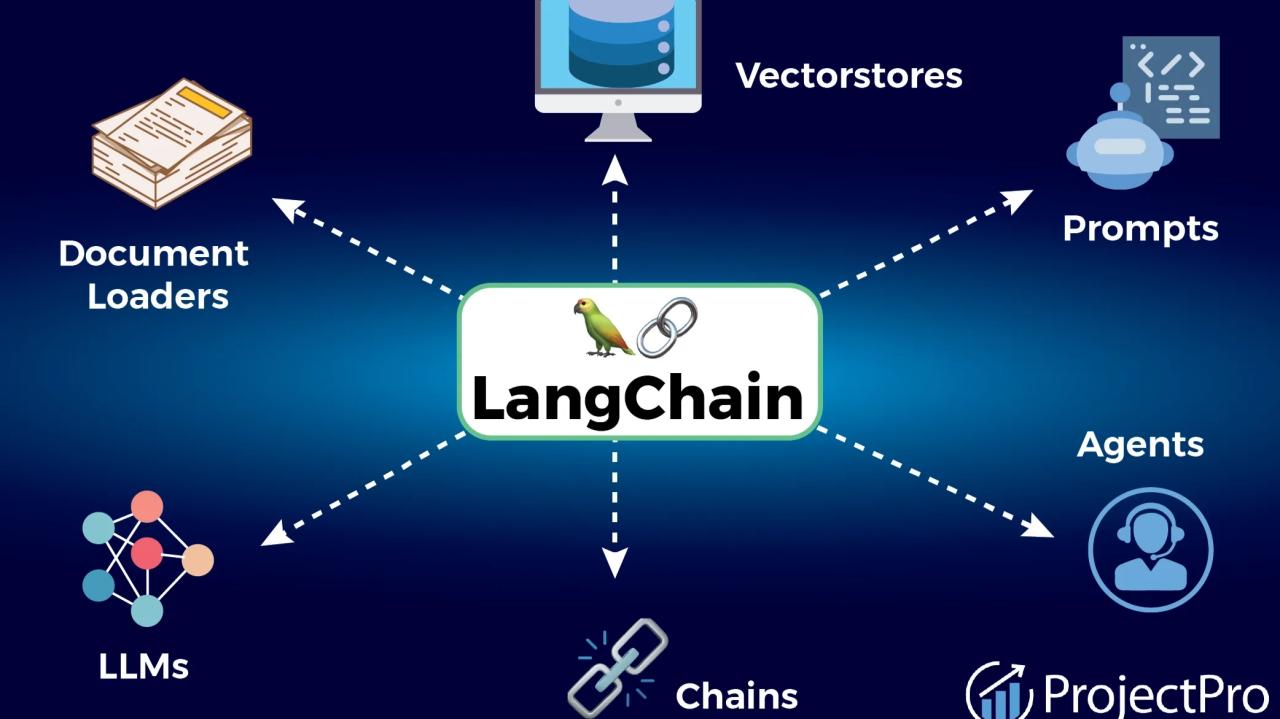
Introduction to LangChain
As large language models (LLMs) like GPT and Claude continue to grow in capability, developers need better tools to build real-world applications on top of them. LangChain is one such powerful framework designed specifically to simplify the development of AI-powered applications. It provides a structured way to connect LLMs with external data sources, tools, and workflows.
Instead of calling an AI model directly, LangChain allows developers to build intelligent pipelines that combine reasoning, memory, and tool usage. This makes it ideal for building chatbots, assistants, automation tools, and enterprise AI systems.
What is LangChain?
LangChain is an open-source framework that helps developers build applications powered by large language models. It acts as a bridge between AI models and real-world data, enabling complex workflows such as multi-step reasoning, data retrieval, and tool execution.
Why LangChain is Important
Directly using LLM APIs can be limiting when building advanced applications. LangChain solves this by introducing structure, modularity, and scalability. It allows developers to chain multiple operations together, making AI applications more powerful and reliable.
- Connect LLMs with databases and APIs
- Enable multi-step reasoning workflows
- Add memory to AI applications
- Integrate tools like search, calculators, and code execution
Core Components of LangChain
1. Chains
Chains are the core building blocks of LangChain. They allow you to combine multiple steps into a single workflow. For example, you can fetch data, process it, and generate a response using an LLM.
2. Agents
Agents are intelligent decision-makers that determine which actions to take based on user input. They can use tools dynamically and adapt to different scenarios.
3. Memory
Memory allows AI applications to retain context across conversations. This is essential for building chatbots that feel natural and personalized.
4. Tools
LangChain integrates external tools like APIs, search engines, and databases, enabling AI systems to access real-time information.
How LangChain Works
LangChain works by orchestrating multiple components into a pipeline. A typical workflow might involve taking user input, retrieving relevant data, processing it through an LLM, and returning a structured output.
from langchain.llms import OpenAI
from langchain.chains import LLMChain

llm = OpenAI()
chain = LLMChain(llm=llm)

response = chain.run('Explain LangChain in simple terms')
print(response)
Real-World Use Cases
- AI chatbots with memory
- Document search and summarization systems
- AI-powered customer support
- Automated data analysis tools
- Personal AI assistants
Advantages of LangChain
- Modular and flexible architecture
- Easy integration with multiple LLM providers
- Supports complex workflows
- Active developer community
Challenges and Limitations
While LangChain is powerful, it can be complex for beginners. Managing chains, agents, and memory requires a good understanding of how LLMs work. Performance optimization and cost management are also important considerations.
Future of LangChain
LangChain is rapidly evolving with new features such as better agent capabilities, improved integrations, and support for multimodal AI. It is expected to become a standard framework for building AI applications in the coming years.
Final Thoughts
LangChain is a game-changing framework for developers looking to build powerful AI applications. By combining LLMs with tools, memory, and workflows, it enables the creation of intelligent and scalable systems. If you want to stay ahead in the AI era, learning LangChain is a must.